

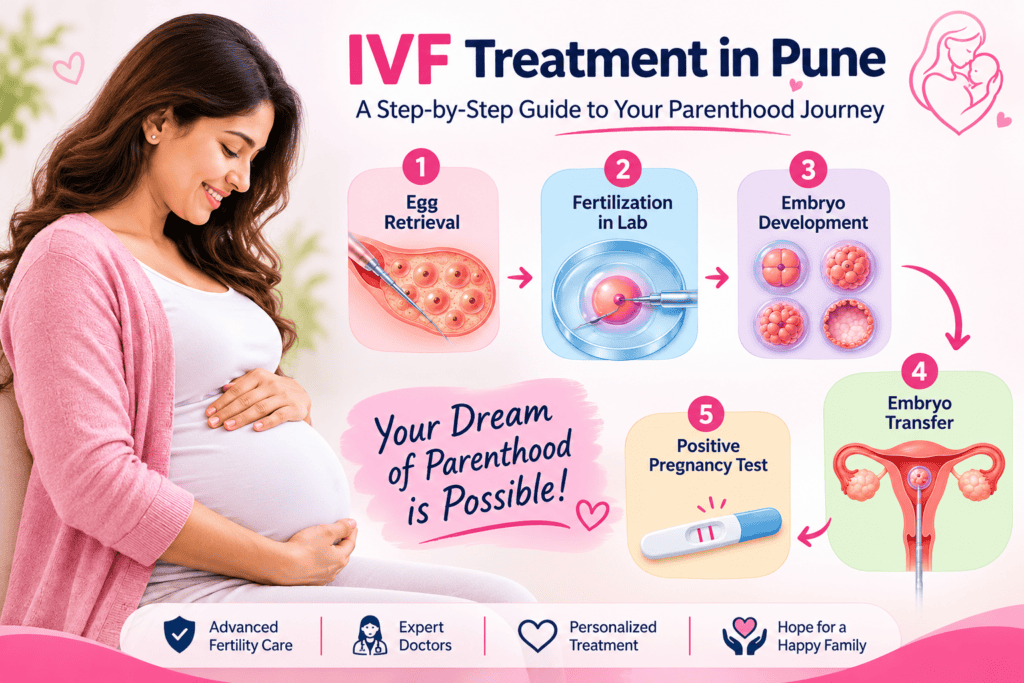
Seeing a positive IVF pregnancy test after fertility treatment brings relief, excitement and a hundred new questions. A positive IVF pregnancy test is an important milestone, but it is usually the start of a short period of careful monitoring, not the final confirmation of how the pregnancy is progressing. Your IVF pregnancy care team reads the result alongside the timing of your embryo transfer, your IVF beta hCG test values, symptoms and follow-up scans.
Thank you for reading this post, don't forget to subscribe!At Elpis IVF Clinic in Aundh, Pune, your fertility specialist can explain what a positive IVF pregnancy test means for your treatment cycle and outline the next steps of IVF pregnancy care. This guide describes the usual process for pregnancy after IVF; your own plan may differ based on your medical history and clinic protocol. If you are still waiting for your result, read our guide to the two-week wait after IVF.
Key Takeaways
- A home test can be encouraging, but an IVF beta hCG test on your blood is used to confirm and measure the pregnancy hormone.
- A positive IVF pregnancy test is the beginning of monitoring, and one hCG value from an IVF beta hCG test cannot establish pregnancy location or guarantee progress.
- Repeat blood testing and an early pregnancy scan are commonly used after a positive IVF pregnancy test to assess early development.
- Continue prescribed medicines during pregnancy after IVF unless your fertility team tells you otherwise.
- Good IVF pregnancy care includes seeking urgent medical advice for severe pain, heavy bleeding, fainting or other concerning symptoms.
Table of Contents
Confirming the Result
After embryo transfer, your clinic schedules a pregnancy blood test at a set interval. The IVF beta hCG test is usually done 9 to 14 days after transfer, depending on protocol. Testing too early can produce a result that is difficult to interpret. Home urine tests vary in sensitivity, and some fertility medicines contain hCG, which may affect an early home test, so ask your clinic when testing is appropriate for your protocol.
A positive IVF pregnancy test generally means that hCG has been detected. The clinic then confirms the result with a quantitative IVF beta hCG test and interprets it in context, and the clinic will then plan an early pregnancy scan. Do not stop or change progesterone, estrogen or other medicines based only on a positive IVF pregnancy test at home or on spotting. Contact your clinic for instructions, because good IVF pregnancy care begins with following your plan, especially in early pregnancy after IVF.
Understanding Beta-hCG
Human chorionic gonadotropin (hCG) is a hormone produced after implantation. A quantitative IVF beta hCG test measures the amount in your blood. The number is useful, but no single value can predict the outcome of every pregnancy after IVF. The timing of the test, embryo age at transfer, individual variation and the laboratory all matter, and so does age.
Your clinician may compare the first value from your positive IVF pregnancy test with a second IVF beta hCG test result obtained after an interval, often around 48 hours. The pattern helps guide follow-up, but hCG does not always rise at one fixed rate. Your doctor will consider the trend rather than apply a rigid rule to one number.
A positive IVF pregnancy test followed by a rising IVF beta hCG test is encouraging, but only an early pregnancy scan can show where the pregnancy is and how it is developing.
Repeat Testing and Early Monitoring
After a positive IVF pregnancy test, a repeat IVF beta hCG test may be recommended to see how hCG is changing. Depending on the result and your history, the clinic may arrange additional testing or plan an early pregnancy scan. Monitoring gathers information while the pregnancy is still too early to assess fully, and it is a central part of pregnancy after IVF.
A slower-than-expected rise, a plateau or a fall does not provide a diagnosis on its own. Your care team may need another IVF beta hCG test and imaging to understand what is happening. If you have a history of ectopic pregnancy, tubal disease or concerning symptoms, your clinician may tailor the monitoring schedule. Patients with earlier losses may find our guide to recurrent miscarriage causes, tests and treatment useful, and those with PCOS or endometriosis may need individual IVF pregnancy care plans.
Medicines and Daily Life
Continue all medicines exactly as prescribed until your fertility specialist gives you a change or stop date. Many IVF protocols include progesterone support in early pregnancy after IVF, and some include estrogen or other medicines. Do not discontinue support because you feel well, notice spotting or see a positive IVF pregnancy test result at home. To understand how hormones influence fertility, see how hormonal imbalances affect fertility.
Once you have a positive IVF pregnancy test, ordinary daily activities can usually continue unless your clinician advises otherwise. Follow the clinic’s guidance on exercise, intercourse, travel, supplements, preparation for your early pregnancy scan and any medicines you take for other conditions. Avoid starting herbal products or over-the-counter medicines without checking that they are suitable during early pregnancy. A balanced diet, hydration, sleep and avoiding tobacco and alcohol are sensible foundations of IVF pregnancy care, but they cannot determine the outcome of pregnancy after IVF.
The First Ultrasound
An early pregnancy scan is commonly scheduled around the time your clinician expects it to provide useful information. After a positive IVF pregnancy test, the early pregnancy scan may assess the location of the pregnancy and look for a gestational sac, yolk sac, embryo and heartbeat when development is far enough along. The exact timing depends on your transfer date, hCG results and symptoms.
If the early pregnancy scan is performed very early, it may be inconclusive and a repeat scan may be needed. This can be emotionally difficult, but it does not automatically mean something is wrong. Your clinician will explain what was seen, what remains uncertain and when another assessment is appropriate, and your clinic will guide the next stage of IVF pregnancy care. Once the scan is reassuring, care in pregnancy after IVF gradually moves toward routine antenatal care, including maternity and delivery care in Aundh.
When to Contact Your Clinic
Contact your fertility clinic promptly if you have bleeding, persistent or worsening abdominal pain, fever or symptoms that concern you. Seek urgent medical care for severe one-sided pain, heavy bleeding, shoulder-tip pain, fainting or marked dizziness. These symptoms need assessment because early pregnancy complications, including ectopic pregnancy, cannot be ruled out by a positive IVF pregnancy test alone.
Acting early is part of safe IVF pregnancy care. If you are unsure whether a symptom is urgent, call your clinic or local emergency service rather than waiting for your scheduled early pregnancy scan. Because pregnancy after IVF can have its own risks, such as ectopic pregnancy, symptoms deserve prompt attention.
Emotional Wellbeing
The period between the IVF beta hCG test and the first early pregnancy scan can feel uncertain. After a positive IVF pregnancy test, it is normal to feel hopeful, anxious, guarded or several emotions at once. Try to avoid comparing your hCG numbers or symptoms with other people’s experiences, and be cautious of online claims; our post on IVF myths vs facts can help.
After a positive IVF pregnancy test, consider choosing one reliable source of information, writing down questions for your clinician and asking a trusted person for support. Emotional support is part of IVF pregnancy care, and pregnancy after IVF can feel different because of the long road behind it. You do not have to interpret every symptom alone.
Conclusion
A positive IVF pregnancy test is a meaningful step, and the next phase is about confirming the result with an IVF beta hCG test and monitoring early development carefully. Follow your prescribed plan, keep your appointments, including your early pregnancy scan, and contact your care team whenever you are uncertain. To discuss IVF pregnancy care and pregnancy after IVF, explore our IVF treatment in Pune services or book an appointment at Elpis IVF Clinic in Aundh, Pune.
FAQs
(Frequently Asked Questions)
Does a positive IVF pregnancy test guarantee a continuing pregnancy?
No. It confirms that hCG has been detected, but follow-up testing and an early pregnancy scan are needed to assess progression.
When is the IVF beta hCG test done after embryo transfer?
The clinic sets the date based on the transfer and protocol. Testing too early can be misleading.
What beta-hCG number is considered good?
There is no single number that predicts every outcome. Timing and the change across tests matter.
Should I stop progesterone after a positive IVF pregnancy test?
No. Continue it until your fertility specialist gives you specific instructions.
Can spotting happen after a positive IVF pregnancy test?
Spotting can occur in pregnancy after IVF for different reasons. Report it to your clinic, especially if it is heavy or accompanied by pain.
When will the early pregnancy scan happen?
Often several weeks after transfer, when the scan is more likely to provide useful information. Your clinician will set the timing.