

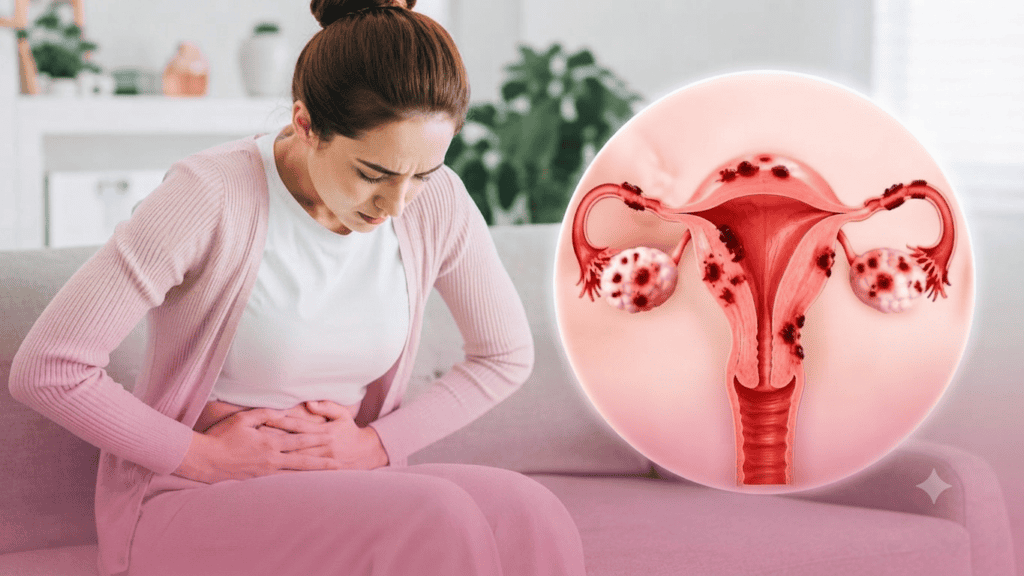
Endometriosis is a chronic condition that can affect the reproductive system and, in some women, make it more difficult to conceive. It occurs when tissue similar to the lining of the uterus grows outside the uterus, commonly around the ovaries, fallopian tubes, and pelvic area.
Thank you for reading this post, don't forget to subscribe!While having endometriosis does not automatically mean that a woman cannot become pregnant, the condition can sometimes affect fertility. The impact can vary significantly depending on factors such as the extent of the disease, pelvic anatomy, age, ovarian reserve, and the presence of other fertility factors.
Understanding the relationship between endometriosis and fertility can help women recognize symptoms, seek timely evaluation, and explore appropriate treatment options.
Key Takeaways
- Endometriosis can be associated with difficulty conceiving, although many women with the condition can become pregnant.
- Pelvic adhesions and changes around the ovaries and fallopian tubes may affect reproductive function.
- Endometriosis can occur with or without obvious symptoms.
- Fertility evaluation may include medical history, ultrasound, ovarian reserve assessment, and other tests.
- Treatment depends on age, symptoms, disease severity, ovarian reserve, and fertility goals.
- Fertility treatments such as IUI or IVF may be considered for some women.
- Women with known or suspected endometriosis may benefit from earlier fertility evaluation rather than waiting for the usual infertility timeframe.
Table of Contents
- What Is Endometriosis?
- How Does Endometriosis Affect Fertility?
- Common Symptoms of Endometriosis
- Endometriosis and Ovulation
- Can Endometriosis Affect Egg Quality?
- Endometriosis and Ovarian Reserve
- How Is Endometriosis Diagnosed?
- Fertility Treatment Options
- Endometriosis and IVF
- Can Women With Endometriosis Get Pregnant?
- When Should You See a Fertility Specialist?
- Frequently Asked Questions
- Conclusion
What Is Endometriosis?
Endometriosis is a condition where tissue similar to the uterine lining grows outside the uterus.
- Ovaries
- Fallopian tubes
- Pelvic lining
- Areas around the uterus
- Other pelvic structures
The condition may cause inflammation and, in some cases, scar tissue or adhesions. Some women experience significant symptoms, while others may have few or no noticeable symptoms. Pelvic pain and infertility are among the common reasons women with endometriosis seek medical evaluation.
How Does Endometriosis Affect Fertility?
The link between endometriosis and difficulty getting pregnant can be complicated. Researchers have proposed several ways in which endometriosis may affect reproductive function.
- Pelvic Adhesions
Endometriosis can cause inflammation and scar tissue. Significant adhesions may distort the normal anatomy of the pelvis and potentially interfere with the release or transport of an egg.
- Changes Around the Ovaries
Endometriosis can affect the ovaries and may result in ovarian endometriomas, sometimes called “chocolate cysts.”
Depending on the circumstances, ovarian involvement and previous surgery may affect ovarian function.
- Inflammation
Endometriosis is associated with inflammatory changes in the pelvic environment. These changes may play a role in reproductive difficulties, although the exact mechanisms are not fully understood.
- Possible Effects on Implantation
Researchers have investigated whether endometriosis may affect the ability of an embryo to implant successfully in the uterus. The biological mechanisms involved remain an area of ongoing research.
Common Symptoms of Endometriosis
Symptoms can vary from one woman to another. Common symptoms may include:
- Painful periods
- Pelvic pain
- Pain during sexual intercourse
- Pain during bowel movements
- Pain during urination, particularly around menstruation
- Heavy or irregular menstrual bleeding
- Bloating or fatigue
- Difficulty becoming pregnant
However, Endometriosis and Fertility the severity of pain does not necessarily indicate the severity of endometriosis. Some women with endometriosis may have minimal symptoms but experience fertility difficulties.
Endometriosis and Ovulation
Ovulation is the process in which an egg is released from the ovary. Successful conception requires regular ovulation as well as healthy sperm, functioning fallopian tubes, and a receptive uterus. Endometriosis may interfere with normal reproductive anatomy, particularly when adhesions or ovarian disease are present. However, endometriosis does not necessarily prevent ovulation. Many women with endometriosis continue to ovulate normally and can conceive naturally.
Can Endometriosis Affect Egg Quality?
The relationship between endometriosis and egg quality is complicated.
Endometriosis involving the ovaries may affect ovarian function. In addition, some research has explored whether inflammatory changes associated with endometriosis may influence oocyte and embryo development. However, individual fertility outcomes vary considerably. A fertility specialist may evaluate ovarian reserve and other factors when developing a treatment plan.
Endometriosis and Ovarian Reserve
Ovarian reserve means the number of eggs that are still available in the ovaries. Doctors may use tests such as:
- Anti-Müllerian hormone (AMH)
- Antral follicle count (AFC)
- FSH and other hormone tests when appropriate
These tests can provide information about ovarian reserve, but they cannot independently predict whether a woman will become pregnant. Women with ovarian endometriosis or previous ovarian surgery may require particularly Endometriosis and Fertility careful assessment of ovarian function.
How Is Endometriosis Diagnosed?
Doctors usually begin the diagnosis by reviewing your medical history and performing a physical examination. Depending on the symptoms and clinical situation, doctors may recommend:
Ultrasound A transvaginal ultrasound can help identify ovarian endometriomas and other pelvic abnormalities.
MRI In selected cases, magnetic resonance imaging may provide additional information about the location and extent of disease.
Laparoscopy
Laparoscopy allows direct visualization of pelvic structures and can be used in selected cases for diagnosis and treatment.
Importantly, laparoscopy is not routinely required for every woman being evaluated for infertility; the decision depends on symptoms, suspected pelvic pathology, and the overall clinical situation.
Fertility Treatment Options
Treatment depends on several factors, including:
- Age
- Duration of infertility
- Severity of endometriosis
- Ovarian reserve
- Previous treatments
- Presence of other fertility problems
- Desire for pregnancy now or later
Possible approaches include:
- Expectant Management For some younger women with mild disease and no other major fertility factors, a doctor may recommend trying to conceive naturally for a period of time.
- Surgery Laparoscopic surgery may be considered in selected women, particularly when there are significant symptoms, endometriomas, or advanced disease.
However, ovarian surgery must be carefully considered because extensive surgery can potentially affect ovarian function.
- Ovulation Stimulation and IUI For selected women, medications that stimulate ovulation combined with intrauterine insemination (IUI) may be considered.
- IVF In vitro fertilization (IVF) may be recommended when other treatments are unlikely to be effective, when infertility has continued, or when there are additional Endometriosis and Fertility.
Endometriosis and IVF
IVF can be an important fertility treatment option for women with endometriosis.
During IVF:
- Ovarian stimulation medications are used.
- Eggs are collected from the ovaries.
- Eggs are fertilized with sperm in a laboratory.
- Embryos are developed.
- An embryo may be transferred to the uterus.
ASRM notes that IVF can maximize the opportunity for conception for some women with endometriosis, particularly when pelvic anatomy is significantly affected by moderate or severe disease.
However, IVF is not automatically required for every woman with endometriosis. The appropriate approach depends on individual circumstances.
Can Women With Endometriosis Get Pregnant?
Yes. Many women with endometriosis can become pregnant.
Having endometriosis does not mean pregnancy is impossible. However, some women may require fertility treatment depending on the severity of the condition and other reproductive factors.
Age is particularly important when planning fertility treatment. Fertility generally declines with age, so women with known endometriosis may benefit from discussing their reproductive plans with a healthcare professional sooner rather than later.
Lorem ipsum dolor sit amet, consectetur adipiscing elit. Ut elit tellus, luctus nec ullamcorper mattis, pulvinar dapibus leo.
When Should You See a Fertility Specialist?
Women with known or suspected endometriosis should consider discussing fertility with a specialist, particularly if they are planning pregnancy. Earlier evaluation may be appropriate if there is:
- Known endometriosis
- Ovarian endometrioma
- Irregular periods
- Significant pelvic pain
- Previous pelvic surgery
- Previous infertility
- Reduced ovarian reserve
- Age-related fertility concerns
ASRM specifically lists known or suspected endometriosis among conditions where infertility evaluation should not necessarily be delayed until the standard 6- or 12-month timeframe.
Conclusion
Endometriosis and fertility are closely connected, but endometriosis does not mean that pregnancy is impossible. The condition can affect fertility through pelvic adhesions, ovarian involvement, inflammation, and other reproductive factors. However, the impact varies widely from woman to woman.
Early evaluation can be particularly valuable for women with known endometriosis who want to become pregnant. Depending on age, symptoms, ovarian reserve, disease severity, and other fertility factors, treatment may include expectant management, surgery, IUI, or IVF. A personalized evaluation by a qualified gynecologist or fertility specialist can help determine the most appropriate path toward pregnancy.
This article is for educational purposes only and should not replace individualized medical advice from a qualified healthcare professional.
FAQs
(Frequently Asked Questions)
Can endometriosis cause infertility?
Endometriosis is associated with infertility, and it may contribute to difficulty conceiving in some women. The exact effect varies depending on disease severity and individual reproductive factors.
Can I get pregnant naturally with endometriosis?
Yes. Many women with endometriosis conceive naturally. However, some may require fertility treatment.
Does endometriosis always affect fertility?
No. The condition does not affect fertility in the same way for every woman. Some women with endometriosis have no difficulty conceiving.
Is IVF effective for endometriosis?
IVF can be an effective treatment option for some women with endometriosis, especially when other fertility factors or advanced disease are present. Individual success rates vary.
Should endometriosis always be treated with surgery before IVF?
No. Surgery before IVF is not automatically recommended for every woman. The decision depends on factors such as symptoms, endometrioma size and location, ovarian reserve, and access to the ovaries during egg retrieval.
One Response